
 Search
 Pioneer of Tibet Tourism for Overseas Travelers since 1984!

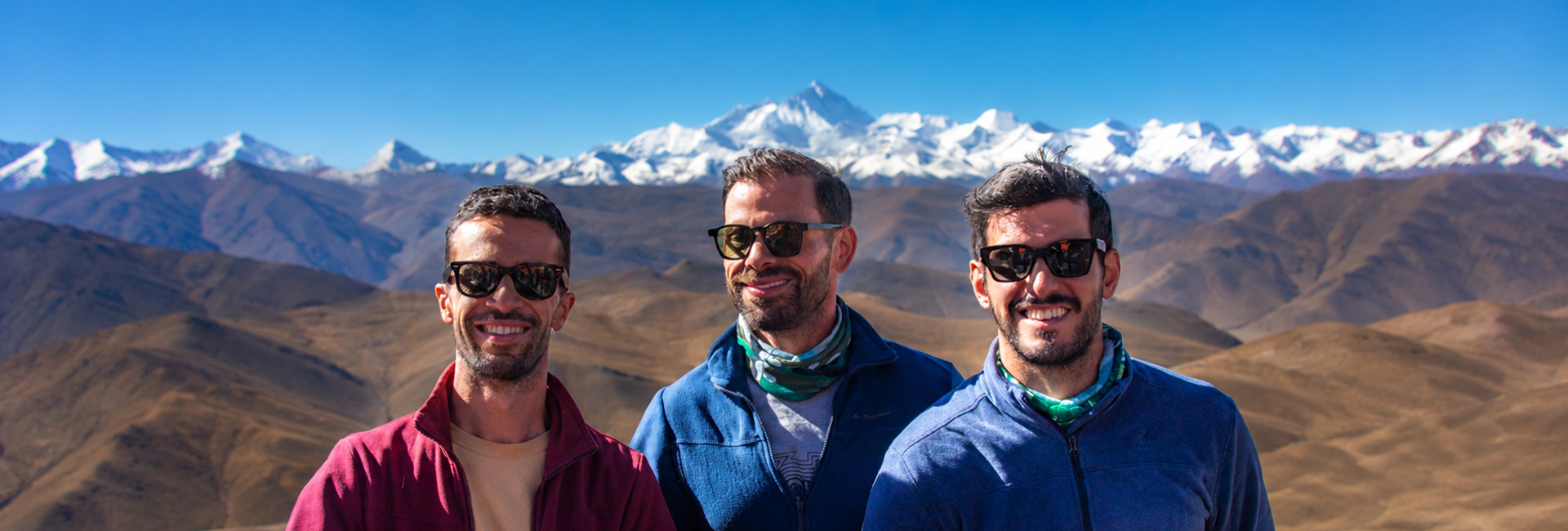
Exchanging foreign currency in Tibet is easier than you might think, especially in Lhasa. You can exchange US dollars, euros, and other major currencies for Chinese yuan (RMB) at selected banks and hotels, or withdraw cash from compatible ATMs. However, we recommend having some RMB ready before arriving in Tibet, especially if you are traveling overland from Nepal.
To help you prepare for your Tibet journey, we’ve put together this practical guide to foreign currency exchange in Tibet. You’ll find out where to exchange money, how much cash to bring, and how to use Alipay, WeChat Pay, and international credit cards while exploring Tibet.
What Currency Is Used in Tibet?
The official currency used in Tibet is the Chinese Yuan (CNY), also known as Renminbi (RMB). Foreign currencies such as US dollars, euros, and Nepali rupees are not accepted for everyday payments in Tibet, so you need to exchange them for Chinese yuan before making purchases.
Chinese yuan banknotes commonly come in six denominations, each with a distinct color to help you recognize them:
- 1 yuan: Green
- 5 yuan: Purple
- 10 yuan: Blue
- 20 yuan: Brown
- 50 yuan: Dark green
- 100 yuan: Red
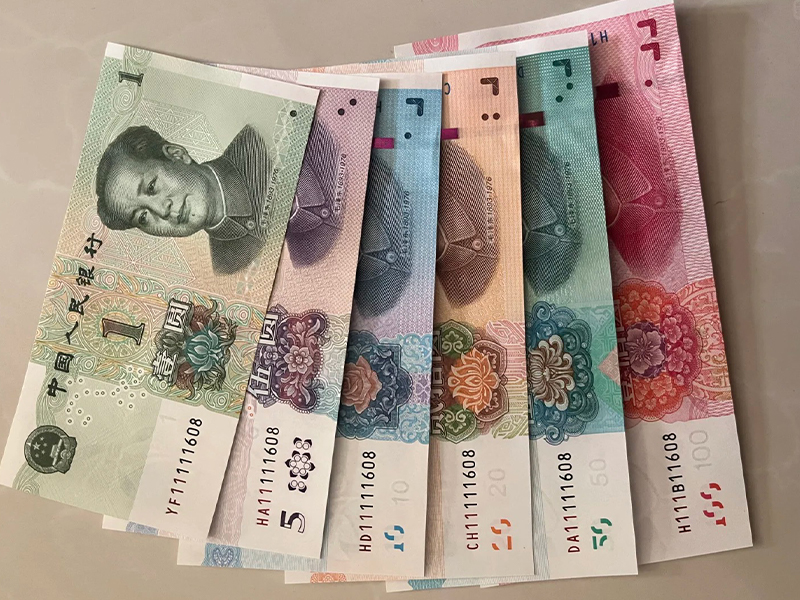
Chinese yuan is the official currency in Tibet, with banknotes ranging from 1 to 100 yuan.
Where to Exchange Foreign Currency in Lhasa?
Lhasa is the most convenient place in Tibet to exchange foreign currency for Chinese yuan (RMB) or withdraw cash from an ATM. You can exchange money at the Bank of China, selected upscale hotels, and potentially at Lhasa Gonggar International Airport, depending on service availability.
Exchange Foreign Currency at the Bank of China
The Bank of China is one of the most reliable options for foreign currency exchange in Lhasa. Its main branch is a good place to start, as not all smaller branches provide foreign exchange services.
Bring your passport when exchanging money. Major currencies, including US dollars, euros, and British pounds, are generally accepted, with exchange rates based on the bank’s rates for the day.
Allow some time for paperwork and processing. Opening hours vary by branch, and foreign exchange services may have shorter hours than regular banking services.
Exchange Foreign Currency at Luxury Hotels in Lhasa
Some upscale hotels in Lhasa offer foreign currency exchange services, usually for registered hotel guests only.
Exchange rates at hotels may be less favorable than those at banks. Hotel exchange services are best treated as a backup option if you need RMB cash urgently. Check with the hotel reception in advance to confirm availability.
Exchange Foreign Currency at Lhasa Gonggar International Airpor
There is an exchange counter at Lhasa Gonggar International Airport, which is handy if you arrive with no RMB at all. However, operating hours can be unpredictable and are often tied to flight schedules, so the counter may be closed when you land.
It is best not to rely solely on airport currency exchange. We recommend arriving with some RMB for your initial expenses and exchanging larger amounts at a bank in Lhasa.
Withdraw Chinese Yuan from ATMs in Lhasa and Shigatse
ATMs are available in major Tibetan cities, including Lhasa and Shigatse. Some ATMs operated by major banks, such as the Bank of China, may accept international debit or credit cards, including Visa and Mastercard, depending on the machine and your card’s network compatibility.
Before traveling, check with your bank that your card can be used in China. Also, be aware of possible withdrawal fees and daily limits, and keep some RMB cash as a backup in case your card is not accepted.
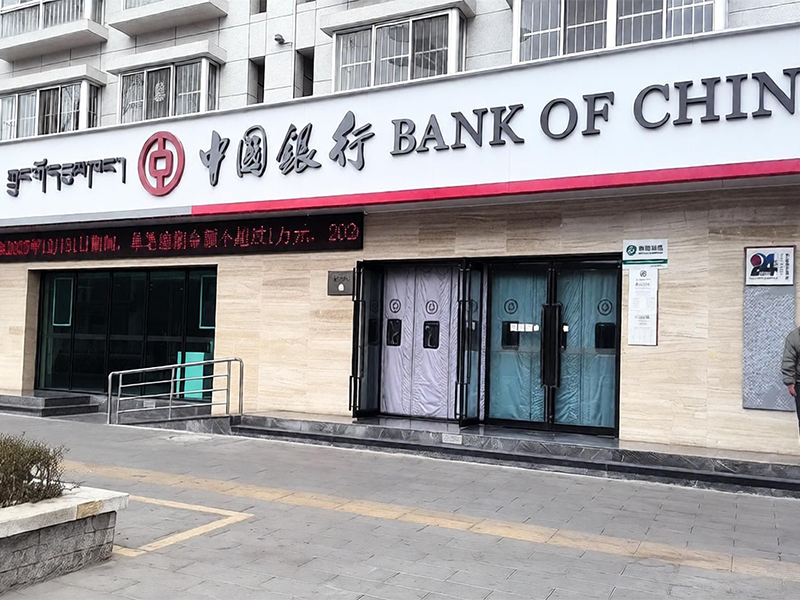
Bank of China is a reliable place to exchange foreign currency into Chinese yuan in Lhasa.
How to Exchange Currency When Entering Tibet from Nepal by Land?
If you are traveling overland from Nepal to Tibet, the route for 2027 tours crosses the Zhangmu Border via Kodari. Banks or authorized currency exchange services may be available near the border, but their availability and operating hours can vary. It is best not to rely on exchanging money at the border.
We recommend preparing some Chinese yuan (RMB) before leaving Kathmandu. You can check with licensed money changers in Kathmandu for RMB availability and exchange rates.
Having some cash on hand will help cover small purchases and unexpected expenses during your first day in Tibet. You can exchange additional foreign currency at the Bank of China once you reach Lhasa.
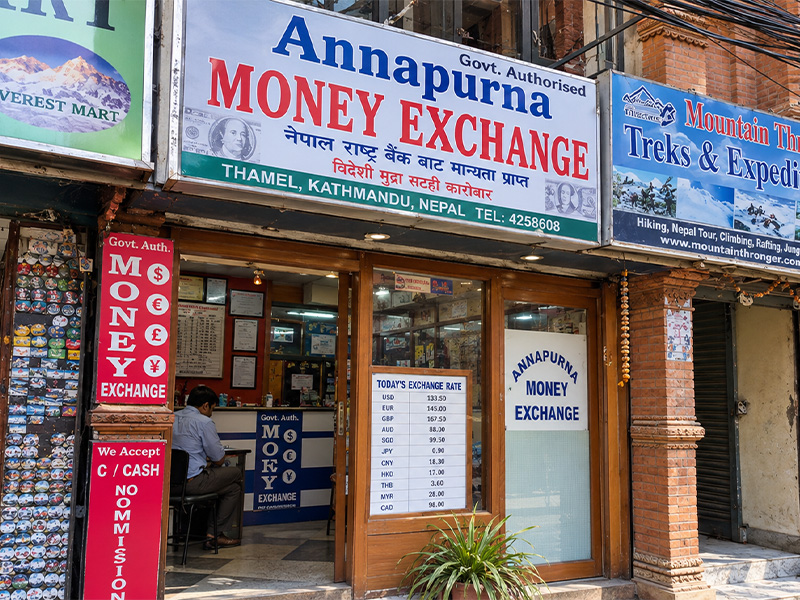
You can exchange your currency for Chinese yuan at a licensed outlet in Thamel before traveling to Tibet.
How Much Cash Should You Bring for a Tibet Tour?
We recommend bringing around RMB 200-300 per person per day for personal expenses during your Tibet tour. This is generally enough for drinks, snacks, occasional extra meals, small souvenirs, and other expenses not included in your tour package.
If you are traveling to remote areas such as Everest Base Camp or Mount Kailash, it is wise to carry some extra cash. Mobile payments and credit cards may not always work in these areas, and access to banks and ATMs is limited.
Here is a general guide to common personal expenses during a Tibet tour:
| Expense Estimated | cash needed |
|---|---|
| Snacks and drinks | RMB 20–50 |
| Extra meals | RMB 40–100 |
| Small souvenirs | RMB 30–100 |
| Monastery offerings | RMB 5–20 |
| Emergency cash reserve | RMB 200–500 total |
Note: These are estimated expenses, not fixed daily costs. The emergency cash reserve is an additional amount to keep for unexpected needs during your trip.
Practical Tips for Using Cash in Tibet
Here are some practical tips to help you use and manage cash during your Tibet tour:
- Carry small RMB banknotes: RMB 1, 5, and 10 notes are useful for snacks, small purchases, and monastery offerings. Large RMB 100 notes can be inconvenient when vendors have limited change.
- Use banknotes instead of coins: Coins are less commonly used in Tibet, so small paper notes are generally more convenient for everyday purchases.
- Keep your cash organized: Separate your daily spending money from your emergency reserve, and keep a small amount easily accessible for everyday expenses.
- Prepare enough cash before leaving major cities: Lhasa is one of the best places to exchange money or withdraw RMB before heading to remote areas. If you plan to visit Everest Base Camp or Mount Kailash, carry extra cash, as access to ATMs is limited.
- Check ATM fees and card restrictions: International ATM withdrawals may involve fees from your bank and the local ATM operator. Check with your bank before traveling and have a backup payment option.
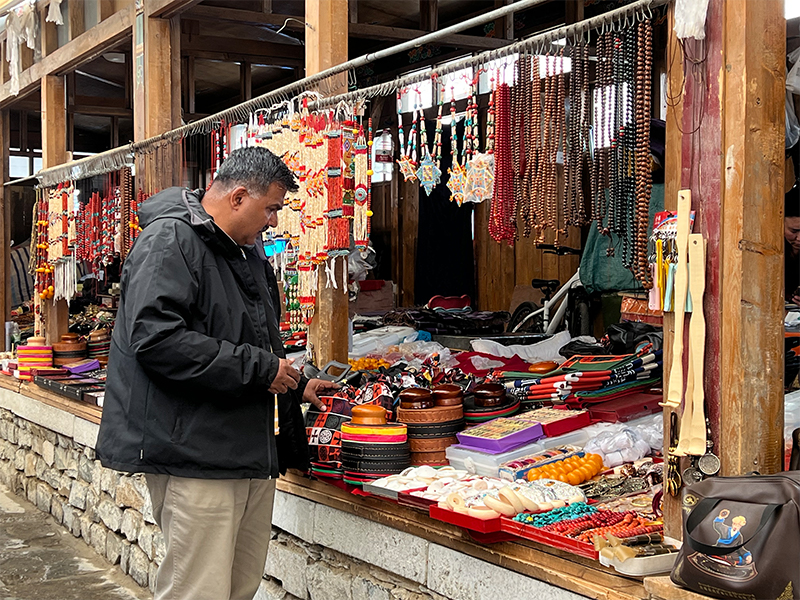
Carry small yuan banknotes for buying snacks, souvenirs, and making offerings at Tibetan monasteries.
Can You Use Alipay, WeChat Pay, and Credit Cards Instead of Cash in Tibet?
In addition to cash, Alipay and WeChat Pay are widely used in Tibet, especially in major cities like Lhasa, Shigatse, and Nyingchi. International credit cards are less commonly accepted, so it is best to understand your payment options before traveling.
Alipay and WeChat Pay Are Widely Used in Tibet
Many restaurants, shops, taxis, and street vendors in Lhasa accept Alipay and WeChat Pay. You can pay by scanning a merchant’s QR code or showing your payment code to be scanned.
Foreign visitors can generally link eligible international bank cards to these apps. If you’re new to mobile payment in China, we recommend setting up Alipay or WeChat Pay before your trip so you can start using it as soon as you arrive.
Keep in mind that mobile payments require an internet connection, which may be unreliable in remote areas. Cold weather can also drain your phone’s battery faster, so always carry some RMB cash as a backup.
International Credit Cards Are Less Reliable in Tibet
International credit cards, such as Visa and Mastercard, are accepted at some upscale hotels and larger stores in Tibet, but are less commonly accepted by smaller businesses.
You may be able to withdraw RMB from ATMs in major cities using compatible international cards. However, do not rely on credit cards alone for daily purchases, as cash and mobile payments are generally more convenient.
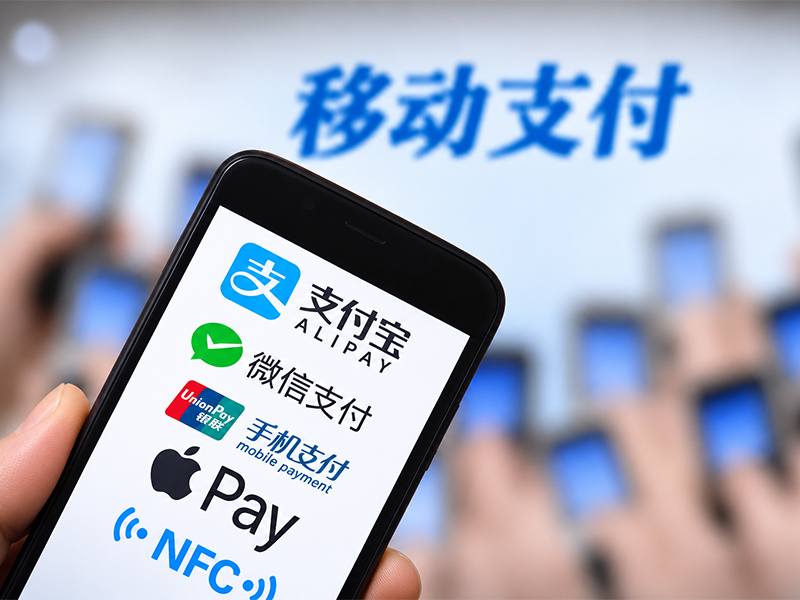
Mobile payments are widely used in Tibet, making shopping and transactions easy.
Conclusion
Lhasa is the most convenient place to exchange foreign currency in Tibet, with banks, selected hotels, and ATMs offering different ways to obtain Chinese yuan (RMB). However, it is best to prepare some RMB before arriving in Tibet rather than relying entirely on local exchange services.
For a smoother Tibet journey, carry small banknotes for everyday expenses and prepare extra cash before visiting Mount Kailash, Everest Base Camp, or some other remote areas. Alipay and WeChat Pay are convenient for payments in major cities, but keeping some cash as a backup is always recommended.
With your money prepared in advance, you can focus on enjoying Tibet’s stunning landscapes, ancient monasteries, and unique cultural experiences. If you have more questions about traveling to Tibet or need practical travel advice, feel free to contact us. We’re always happy to help you plan your journey.

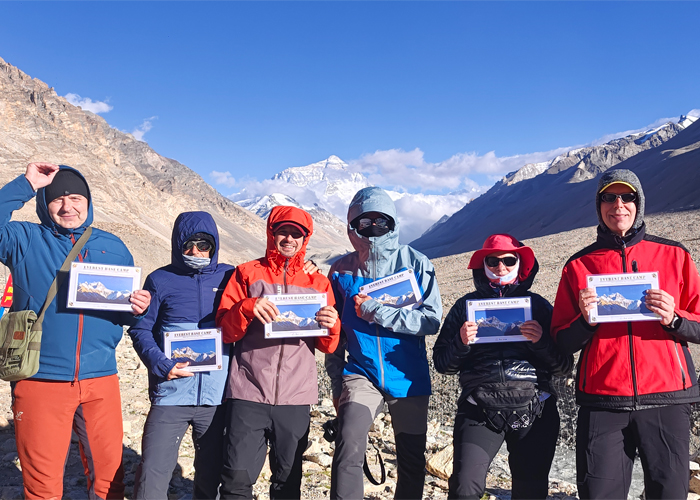
"Foreign Currency Exchange in Tibet: Where to Exchange Money & How Much Cash to Bring"